
Taiwan's first long-term care animal park opens; WDA provides 60 mobile kennels to help senior dogs embrace a new life.
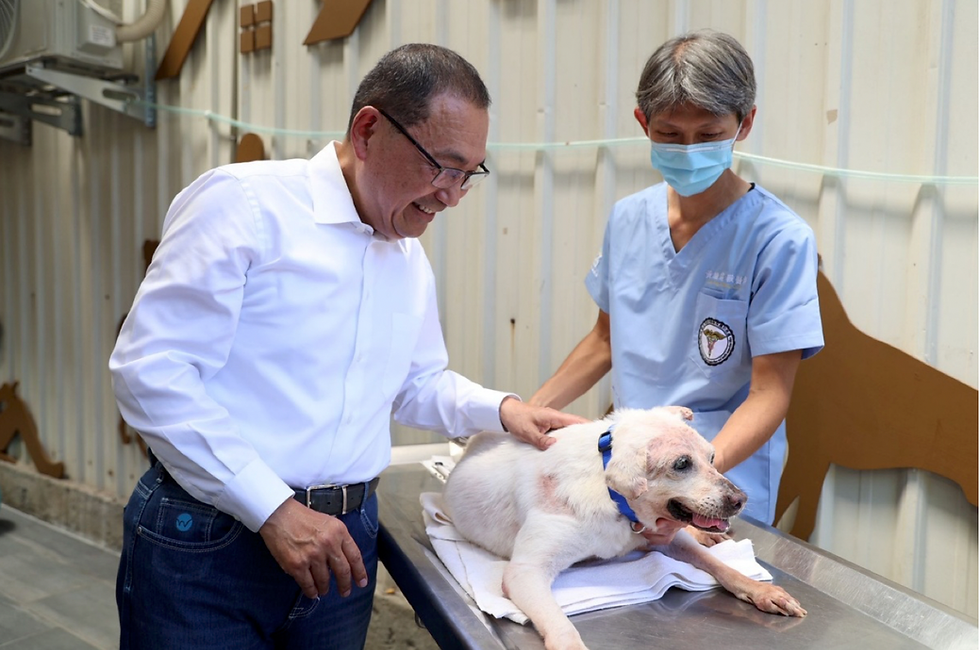
Taiwan's first long-term care facility for stray dogs held its opening ceremony on July 3. Built by the New Taipei City Animal Protection Office, the long-term care center for stray dogs is located in the quiet mountain area of Zhonghe Animal Shelter. Drawing on professional experience in shelter care both domestically and internationally, and based on the needs of elderly, chronically ill, and disabled animals, it has created a comprehensive long-term care environment with excellent facilities and services. It is dedicated to caring for dogs and cats in New Taipei City's eight animal shelters who require advanced medical care and long-term care.
Take "Huazhiwan," the old dog who posed for a photo with New Taipei City Mayor Hou You-yi on the day of its inauguration ceremony, for example. It suffers from dementia and hind limb joint degeneration, as well as incomplete hair loss due to atopic dermatitis. Its care is far more challenging than that of a healthy dog, posing a significant challenge to shelters with large numbers of dogs. However, at the Zhonghe Animal Shelter's long-term care center, it receives meticulous care, including regular medication and acupuncture therapy. Veterinarian Huang Ji-ting stated that it has grown a lot of new fur, and its hind leg joints have improved.
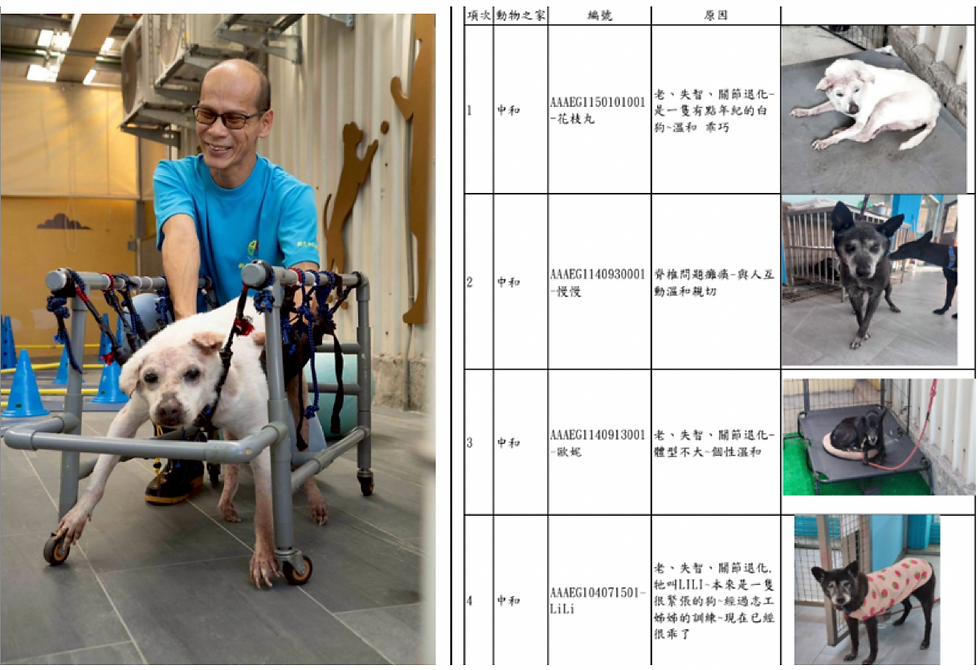
The "long-term care center" is not a "terminal care facility." Currently, the Zhonghe Long-Term Care Center houses 10 elderly dogs, all of whom will have the opportunity to be adopted by families once their health improves. To help them regain their vitality, the center has carefully designed adjustable lighting systems and ramps, and equipped them with rehabilitation facilities including hydrotherapy machines and fitness equipment. Custom-made wheelchairs are also provided for dogs with hind limb paralysis. Dr. Huang stated that one elderly dog, who was originally hind limb paralyzed, was able to walk after treatment and was fortunate enough to be adopted by a loving family.
At the opening ceremony, Mayor Hou You-yi announced two new animal welfare measures: first, adopting long-term care animals will entitle them to lifelong free medical care, encouraging people to bring them home; second, free animal long-term care rehabilitation education courses will be offered to help owners of senior pets improve their care knowledge. The New Taipei City Animal Protection Office also published a "List of Long-Term Care Dogs and Cats," allowing the public to view online the 25 senior cats and dogs in 8 animal shelters that are currently waiting for adoption.
It's worth mentioning that during the renovation of Zhonghe Animal Shelter, the World Canine Organization (WCAN) donated 60 mobile kennels. These kennels are designed to be built without foundations, quickly assembled and disassembled, and adaptable to different site requirements. This ensures that the dogs have safe and stable temporary shelter from the elements while waiting for their new environment to be completed. This substantial assistance provided during the renovation transition period led to the WCAN Taiwan Chief Representative being invited to attend the opening ceremony of the Zhonghe Animal Shelter Long-Term Care Center, witnessing this important moment in the upgrade of the shelter's facilities.


Comments